GEOTECHNICALENGINEERING1
STOCKTON
HomeGround improvementVibrocompaction design

Vibrocompaction Design for Deep Soil Improvement in Stockton

Geotechnical engineering with regional judgment.

LEARN MORE

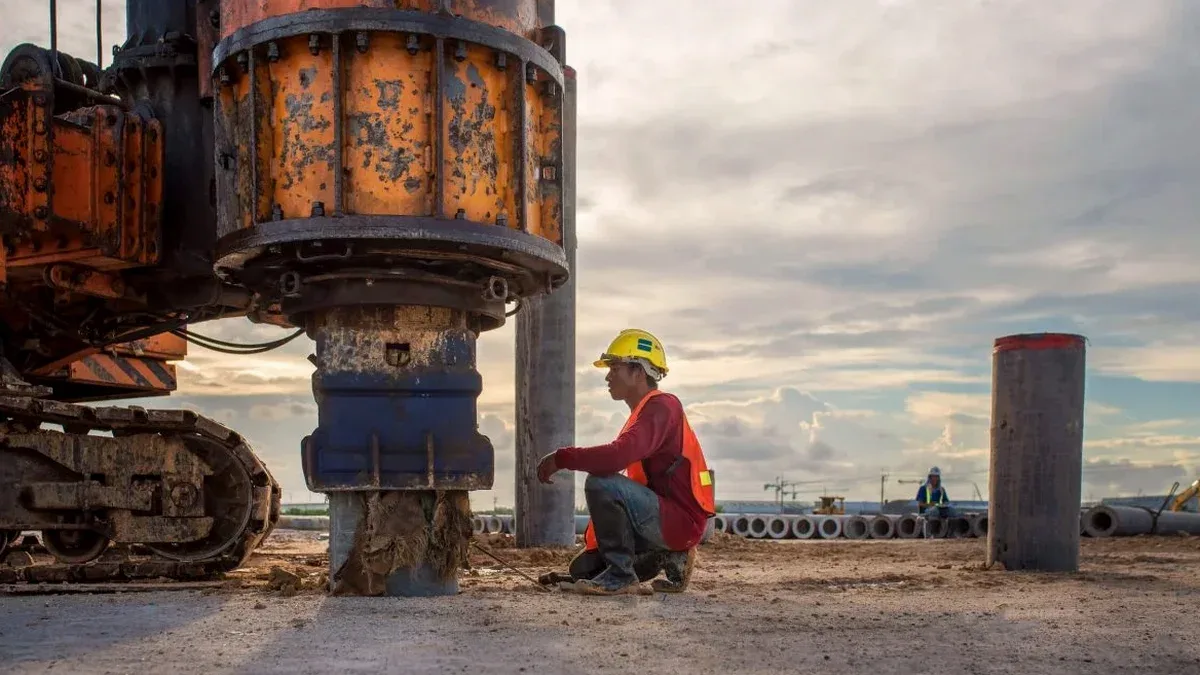
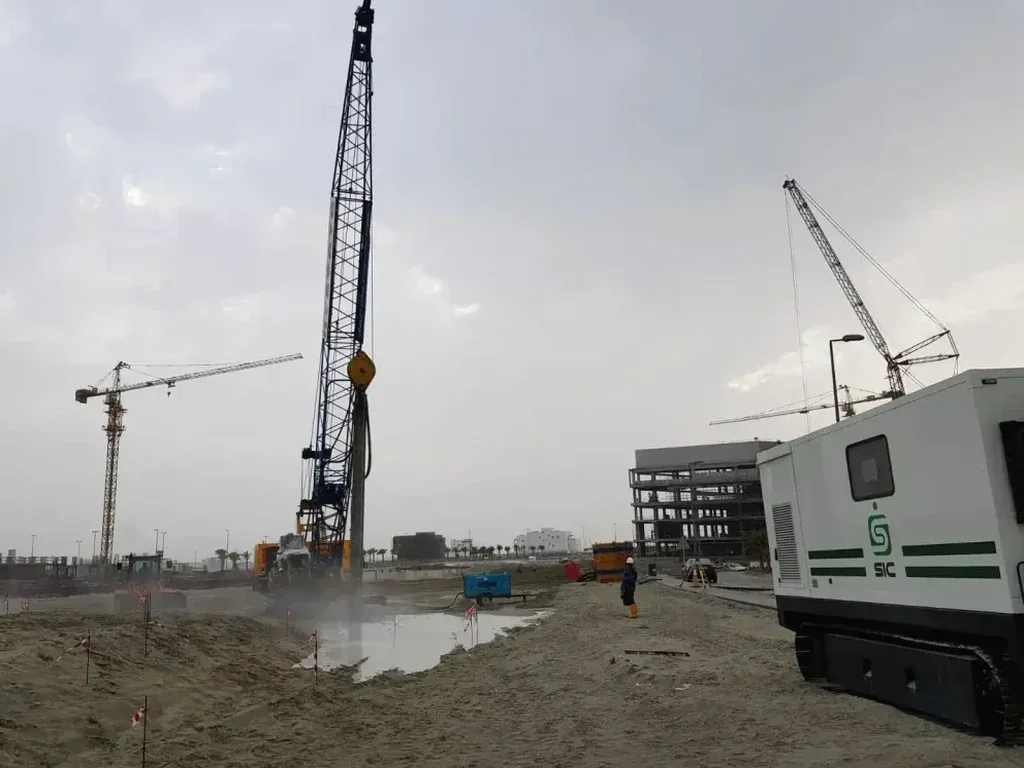
The ground conditions shift dramatically as you move from the compacted sands near the Port of Stockton toward the looser alluvial deposits that define much of the city's eastern expansion. A warehouse project near Rough and Ready Island might sit on relatively competent material, yet a commercial development just two miles inland can encounter up to 25 feet of liquefiable silty sand requiring deep densification. Our vibrocompaction design tackles this variability head-on, using depth vibrator probe patterns engineered to densify these problematic layers before structural loads are applied. The process relies on horizontal vibration combined with water or air jetting to rearrange granular particles into a denser state, and we calibrate each grid based on site-specific data from CPT testing and grain size analysis to achieve target relative density above 70 percent.

A properly designed vibrocompaction grid can increase relative density from 40 percent to over 80 percent in three probe passes, transforming liquefiable sand into competent bearing material.
Our service areas

How we work

Stockton's Mediterranean climate creates a distinct seasonal rhythm for ground improvement work. Summer temperatures routinely cross 100°F, accelerating evaporation and lowering the water table in the eastern basin, which shifts the effective stress regime in the upper 15 feet and can reduce vibrator penetration efficiency if not accounted for in the probe frequency and water jet pressure. Winter brings the Delta fog and occasional saturation of near-surface sands, actually improving the vibrocompaction response because saturated granular soils transmit vibratory energy more uniformly than dry ones. Our design methodology integrates these seasonal soil moisture fluctuations with ASTM D1586 borehole data and grain size analysis to specify probe spacing, vibration duration, and lift thicknesses that perform consistently whether the contractor mobilizes in July or January. The result is a densified soil mass with minimal post-construction settlement and improved resistance to the cyclic softening that threatens structures in this seismically active corridor.
Vibrocompaction Design for Deep Soil Improvement in Stockton
Technical reference — Stockton

Local geotechnical context

A mid-rise residential project along the March Lane corridor encountered a 14-foot layer of loose dredged fill that had been placed during the 1960s without compaction control. The original geotechnical report suggested overexcavation and recompaction, but the proximity to an active canal and the depth of the fill made that approach both risky and cost-prohibitive. Our vibrocompaction design specified a triangular probe grid at 8-foot spacing with controlled water jetting to prevent lateral displacement toward the canal embankment. The alternative was a deep foundation solution that would have added months to the schedule and nearly doubled the foundation budget. Skipping ground treatment in this scenario would have left the structure vulnerable to differential settlement exceeding 3 inches under seismic loading, a condition that Stockton's post-2014 building department now scrutinizes carefully during plan review under the updated California Building Code references.

Need a geotechnical assessment?

Reply within 24h.

Email: info@geotechnicalengineering1.com

Regulatory framework

IBC 2021 Section 1805 — Dampproofing and Waterproofing (ground improvement acceptance criteria), ASCE 7-22 Chapter 20 — Site Classification Procedure for Seismic Design, ASTM D1586 — Standard Test Method for Standard Penetration Test (SPT) and Split-Barrel Sampling of Soils, ASTM D2487 — Standard Practice for Classification of Soils for Engineering Purposes (Unified Soil Classification System), Caltrans Standard Specifications Section 19 — Earthwork (vibratory compaction requirements)

Technical parameters

ParameterTypical value
Applicable soil typesGranular soils with fines content < 15%
Effective depth range10 ft to 100 ft below grade
Probe power range130 kW to 350 kW electric or hydraulic
Probe spacing (square grid)5 ft to 12 ft center-to-center
Target relative density70% to 85% (per IBC Section 1805)
Vibration frequency15 Hz to 30 Hz (variable during penetration)
Post-treatment verificationCPT, SPT, or PMT at 5% to 10% of probe points

Frequently asked questions

What soil conditions in Stockton are suitable for vibrocompaction?

Vibrocompaction works best in granular soils with fines content below 15 percent, which describes many of the loose alluvial sands and silty sands found across Stockton's basin. When fines exceed 15 to 20 percent, the vibratory energy attenuates too quickly and the pore pressure response changes, making the method ineffective. We always run grain size analysis and CPT soundings first to confirm suitability before committing to a vibrocompaction design. For silty soils with higher fines content, we may recommend stone columns or a different ground improvement technique.

How much does a vibrocompaction design for a Stockton commercial lot cost?

The design fee typically falls between US$1,440 and US$5,880 depending on treatment area, depth, and verification testing requirements. A one-acre site with 30-foot treatment depth and a standard CPT verification program usually lands near the middle of that range. The design cost is a small fraction of the overall ground improvement contract and is often recovered through optimized probe spacing that reduces field time.

How does vibrocompaction compare to stone columns for liquefaction mitigation?

Vibrocompaction densifies the existing soil mass without importing backfill material, making it faster and less expensive than stone columns when the soil is predominantly granular with low fines content. Stone columns provide both densification and drainage reinforcement and remain the better choice for silty soils where vibrocompaction alone cannot achieve the target density. In Stockton's cleaner sands, vibrocompaction typically reduces treatment cost by 30 to 40 percent compared to stone columns while achieving equivalent liquefaction resistance.

What verification testing is required after vibrocompaction?

IBC and ASCE 7 require post-treatment verification at a minimum of 5 percent of probe locations, though we often recommend 10 percent on critical structures. We typically use CPT soundings because they provide continuous tip resistance and friction ratio profiles that clearly show density improvement with depth. SPT borings may supplement the program where correlation to past data is needed. All verification data is compiled into a report comparing pre- and post-treatment conditions for building department submittal.

Can vibrocompaction be performed near existing structures in downtown Stockton?

Yes, but the design must account for vibration-induced settlement and lateral displacement effects on adjacent foundations and utilities. We specify a reduced vibration amplitude during the initial penetration phase within 20 feet of existing structures and often require vibration monitoring with seismographs at property lines. For buildings with shallow foundations on loose sand within 15 feet of the treatment zone, we may recommend a pre-construction condition survey and settlement monitoring points to document baseline conditions before the vibratory work begins.

Location and service area

We serve projects in Stockton and surrounding areas.

View larger map