GEOTECHNICALENGINEERING1
STOCKTON
HomeInvestigationExploratory test pit

Exploratory Test Pit Excavation in Stockton, CA

Geotechnical engineering with regional judgment.

LEARN MORE

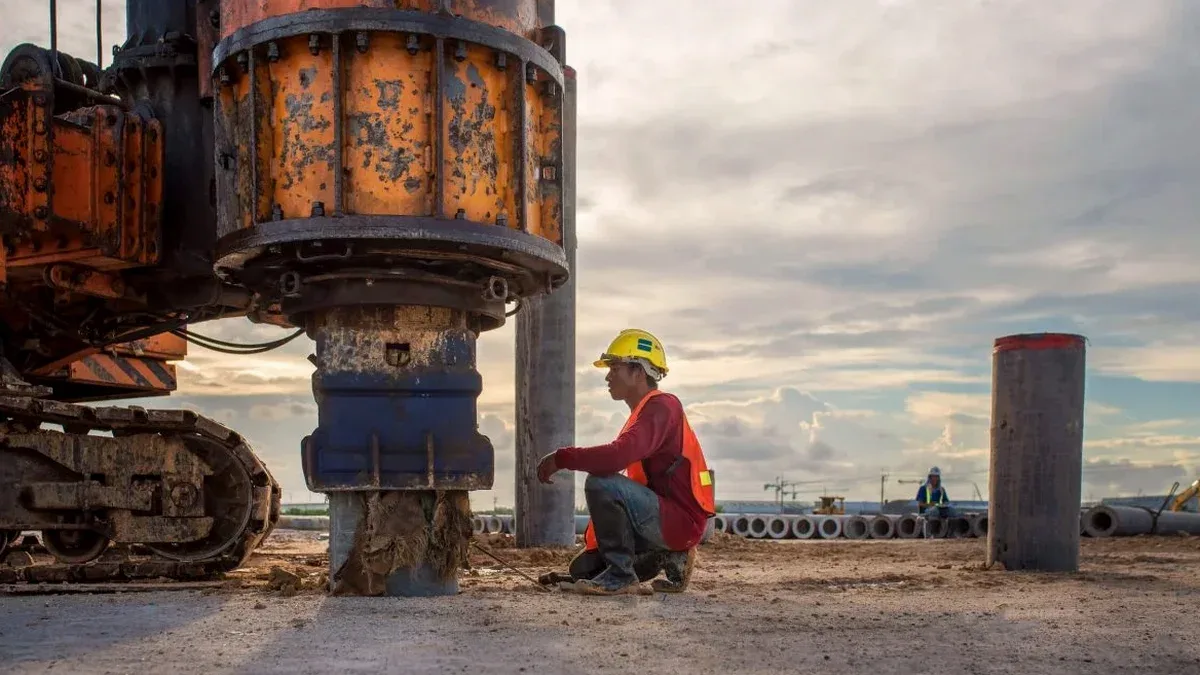
The steel bucket of the excavator cuts through the topsoil off Eight Mile Road, and within minutes our field geologist is climbing into a clean three-foot-wide trench to log the strata. In Stockton, where the subsurface shifts between natural levee sands and pockets of highly compressible organic clay from the San Joaquin River floodplain, an exploratory test pit provides the most direct window into what lies beneath the foundation footprint. Unlike borehole methods that recover disturbed cuttings, this technique exposes the intact profile so we can photograph bedding contacts, measure moisture fronts, and extract block samples that preserve the soil fabric. For projects across San Joaquin County, from industrial warehouses near the airport to residential subdivisions east of Highway 99, the test pit remains the fastest tool for mapping shallow variability when the water table allows excavation depths of 10 to 15 feet.

A single afternoon with an open trench reveals more about the depositional history of Stockton's flood basin than a dozen SPT borings can infer from split-spoon samples.
Our service areas

How we work

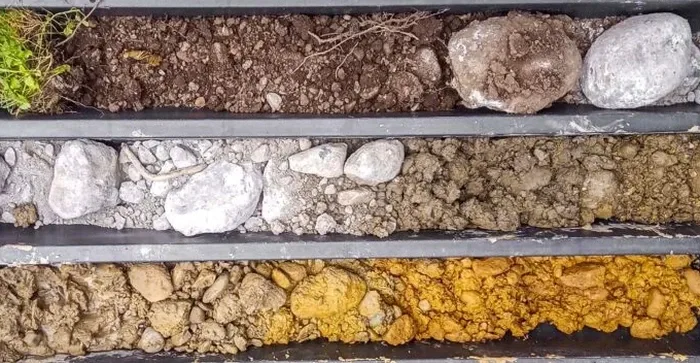
A practical observation from our work in the Weston Ranch and Spanos Park areas is that the upper five feet often contain a discontinuous fill layer—remnants of orchard grading or import material placed decades ago when the land transitioned from agriculture to development. That layer rarely appears on legacy maps, and if it goes unlogged, the structural engineer ends up designing footings on assumed native soil that simply is not there. During the exploratory test pit we log density changes with a pocket penetrometer, collect bulk samples for laboratory grain-size analysis per ASTM D6913, and extract thin-walled tube specimens for Atterberg limits determination. The combination tells us whether the near-surface material classifies as a CL lean clay that will shrink and swell with the seasonal canal irrigation cycles, or a well-graded sand that drains quickly but may be loose enough to densify under vibratory compaction. We also scrape the trench wall with a spatula to reveal thin silt seams—subtle features that control lateral seepage and can trigger construction dewatering costs if not identified early.
Exploratory Test Pit Excavation in Stockton, CA
Technical reference — Stockton

Local geotechnical context

A four-story medical office building under construction near St. Joseph's Medical Center encountered a layer of saturated peat at eight feet depth—material that had gone undetected by earlier cone penetration testing because the tip resistance in organic slurry reads near zero and was dismissed as instrument drift. When the contractor opened a test pit as a verification step, the trench walls began to seep within twenty minutes, and the base heaved slightly overnight. The discovery forced a redesign of the elevator pit foundation, switching from a shallow spread footing to a mat slab with a reinforced subgrade. In Stockton's western quadrant especially, where the historical marsh deposits interfinger with sandy channel fills, skipping the exploratory test pit leaves the structural design blind to thin compressible lenses that can generate differential settlement of half an inch or more within the first year of service.

Need a geotechnical assessment?

Reply within 24h.

Email: info@geotechnicalengineering1.com

Regulatory framework

ASTM D2488 (Description and Identification of Soils – Visual-Manual Procedure), ASTM D6913 (Particle-Size Distribution – Sieve Analysis), Cal/OSHA Title 8 §1541 (Trench and Excavation Safety), IBC 2022 (Chapter 18 – Soils and Foundations)

Technical parameters

ParameterTypical value
Maximum typical depth10–15 ft (deeper with shoring per Cal/OSHA soil type)
Trench width24–36 inches (bucket-width dependent)
Sampling methods usedBlock samples, thin-walled tubes, bulk disturbed jars
In-situ measurementsPocket penetrometer, torvane, density drive cylinder
Applicable ASTM standardsASTM D2488 (visual-manual), ASTM D6913 (sieve), ASTM D4318 (Atterberg)
Shoring requirement trigger≥5 ft depth unless competent rock (Cal/OSHA §1541)
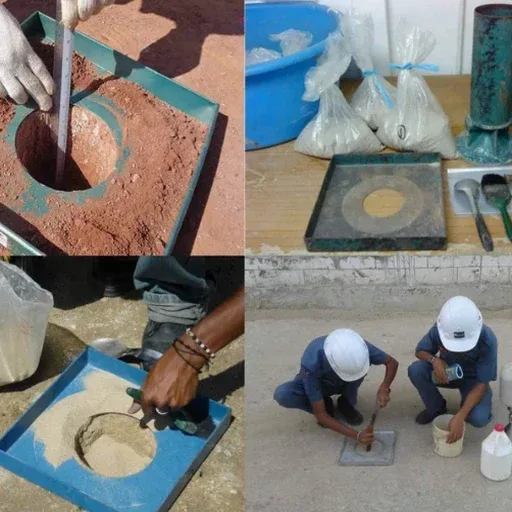
Backfill compaction verificationNuclear gauge or sand cone per ASTM D1556

Frequently asked questions

How deep can an exploratory test pit go in Stockton soil?

Most of our Stockton test pits reach 10 to 15 feet with a standard excavator, which is sufficient to get through the active root zone, any undocumented fill, and into the competent levee sand or stiff clay below. Deeper excavations are possible but trigger Cal/OSHA shoring requirements at 5 feet unless the trench is cut entirely in stable rock. In the high-water-table areas south of the Calaveras River, we often stop sooner because groundwater inflow makes logging impractical without dewatering.

What is the cost range for a single test pit in San Joaquin County?

A single exploratory test pit with full logging, sampling, and backfill generally runs between US$510 and US$930, depending on depth, access constraints, and whether we need to bring in a separate compaction device for the backfill lifts. The price includes utility locates, the excavator and operator, a field geologist for the full day, and a written log with photographs.

Can test pits replace SPT borings for a foundation investigation?

They complement each other rather than replace. An exploratory test pit gives us the lateral continuity and visual detail that a boring cannot—we see cross-bedding, fissures, and fill boundaries directly. But the test pit stops at the water table or shoring limit, whereas an SPT drilling rig can advance to 50 feet or more and measure blow counts in deeper bearing strata. For most Stockton projects, we recommend at least one test pit paired with two or three borings to build a complete three-dimensional ground model.

How soon after the pit is dug can the site be restored?

Most test pits are backfilled the same day. We log and sample in the morning, and the excavator operator places backfill in 8-inch lifts with bucket tamping by early afternoon. If the project specification requires nuclear density testing of the compacted lifts, we may stretch to a second half-day, but the excavation itself is never left open overnight.

Location and service area

We serve projects in Stockton and surrounding areas.

View larger map