GEOTECHNICALENGINEERING1
STOCKTON
HomeIn-Situ TestingField permeability test (Lefranc/Lugeon)

Field Permeability Testing (Lefranc/Lugeon) in Stockton

Geotechnical engineering with regional judgment.

LEARN MORE

Stockton’s growth from a Gold Rush port to a major Central Valley logistics hub has placed tens of thousands of structures atop the complex alluvial and fluvial deposits of the San Joaquin Delta. With a population exceeding 320,000 and a vast network of levees protecting reclaimed islands, groundwater movement through these layered silts, sands, and peats becomes a first-order design parameter. The city sits barely two meters above sea level in many neighborhoods, where seasonal saturation and artesian pressure influence everything from basement dewatering to deep foundation design. A test pit investigation often reveals the macrostructure of these near-surface deposits, but only a field permeability test quantifies the flow regime that governs long-term performance. Our technical team runs Lefranc and Lugeon procedures across Stockton, from the Port to Hammer Lane, delivering the hydraulic conductivity values that engineers need for dewatering system sizing, seepage analysis, and cutoff wall design.

In Stockton’s deltaic soils, a Lefranc test run at the wrong depth can miss the sand lens that floods your excavation.
Our service areas

How we work

On a recent mixed-use project near the Stockton Deep Water Channel, we encountered interbedded sands with silt seams that raised serious questions about bottom stability during excavation. The contractor needed reliable hydraulic conductivity before committing to a dewatering plan. We deployed the Lefranc method in exploratory borings, running constant-head tests at three-meter intervals through the sandy units, then switched to Lugeon testing in the underlying weathered bedrock, injecting water under controlled pressure through a single packer assembly. The resulting permeability profile showed values ranging from 10⁻³ cm/s in the upper sands to 10⁻⁵ cm/s at the rock interface. Where the data revealed lateral variability, we correlated results with CPT testing to map continuous stratigraphy without gaps. For the granular layers controlling inflow, we also ran a grain size analysis to validate the field data against Hazen’s empirical correlation—confirming the sand’s clean, uniform nature matched the measured permeability.
Field Permeability Testing (Lefranc/Lugeon) in Stockton
Technical reference — Stockton

Local geotechnical context

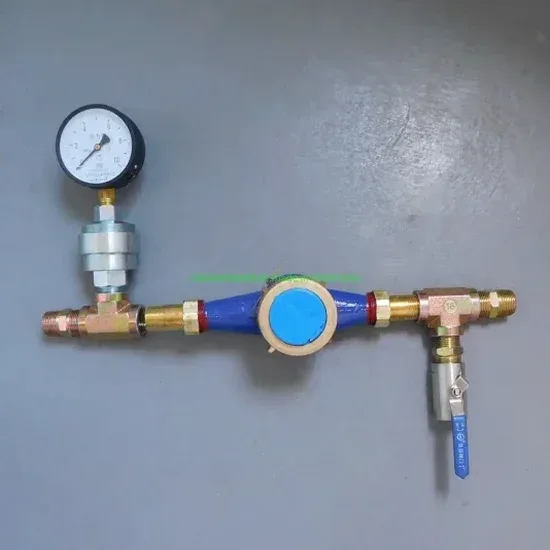
The equipment we mobilize for Stockton projects includes an electric submersible pump with a calibrated flow meter and digital pressure transducer, paired with a packer assembly rated for 2 MPa injection pressure. The biggest risk in this market is not the equipment failure but the misapplication of the test type. Running a Lugeon test in soft alluvium where a Lefranc procedure is called for gives meaningless numbers—the formation simply fractures under injection pressure. We have seen this error on more than one Stockton site where unconsolidated deltaic silts were mistakenly treated as soft rock. Another frequent issue is insufficient borehole development before testing: if the sidewall is smeared with clay from auger drilling, the measured permeability can be an order of magnitude too low. Our protocol follows strict cleaning and surging procedures, and we never run a test without first verifying borehole stability through the full saturated column. When the data feeds a dewatering or deep excavation design, that level of rigor is non-negotiable.

Need a geotechnical assessment?

Reply within 24h.

Email: info@geotechnicalengineering1.com

Explanatory video

Regulatory framework

ASTM D4630-19: Standard Test Method for Determining Transmissivity and Storage Coefficient of Low-Permeability Rocks by In Situ Measurements Using the Constant Head Injection Test, ASTM D2434-22: Standard Test Methods for Measurement of Hydraulic Conductivity of Coarse-Grained Soils, IBC Section 1803.5.5: Ground-water table investigation requirements, ASCE 7-22 Chapter 6: Flood loads and groundwater considerations

Technical parameters

ParameterTypical value
Test methodLefranc (constant/variable head) in soil; Lugeon (pressure injection) in rock
Applicable ASTM standardASTM D4630 for rock mass; reference ASTM D2434 for granular soils
Typical K range measured10⁻² to 10⁻⁷ cm/s depending on formation
Borehole diameter compatibility76 to 150 mm (NX to HQ core hole or hollow-stem auger)
Packer system for LugeonSingle or double pneumatic packer with 1-3 m test interval
Pressure stages (Lugeon)5-stage cycle: P1-P2-P3-P2-P1 per ISRM recommendations
Reporting unitsLugeon value (1 Lu = 1 L/min/m at 1 MPa); cm/s for Lefranc
Test depth capabilityUp to 60 m with standard equipment; greater depths available

Frequently asked questions

What is the difference between Lefranc and Lugeon testing, and which one does my Stockton project need?

Lefranc testing measures hydraulic conductivity in soil by adding or removing water from a borehole section under low hydraulic gradients. Lugeon testing applies pressurized water into rock intervals through a packer system, quantifying fracture flow characteristics. In Stockton, most foundation-level investigations use Lefranc because the upper 15 to 30 meters are typically alluvial sands, silts, and clays. Lugeon becomes relevant when the project encounters the underlying bedrock—often weathered Franciscan Complex units—or when assessing dam and deep tunnel conditions. We determine the appropriate method after reviewing the boring logs and project depth requirements.

What does a field permeability test cost in the Stockton area?

For a standard Lefranc or single-interval Lugeon test in Stockton, budget between US$710 and US$950 per test zone. This includes equipment mobilization, test execution, data reduction, and the permeability section of the geotechnical report. The final cost depends on the number of test intervals, depth of testing, and whether the test is run inside an existing borehole or requires a dedicated drilling setup. We provide a fixed-price quotation after reviewing the project's exploration plan.

How long does it take to get permeability test results?

Field data is recorded in real time during the test, and preliminary hydraulic conductivity values are available within 24 hours. The formal report section with corrected K values, graphical flow-versus-pressure plots for Lugeon tests, and interpretation relative to the site stratigraphy is typically delivered within three to five working days after completing the field program. For time-sensitive dewatering design, we can expedite the data reduction and issue a preliminary memo.

Location and service area

We serve projects in Stockton and surrounding areas.

View larger map