GEOTECHNICALENGINEERING1
STOCKTON
HomeFoundationsRaft/mat foundation design

Raft/Mat Foundation Design in Stockton: Engineering on Compressible Valley Soils

Geotechnical engineering with regional judgment.

LEARN MORE

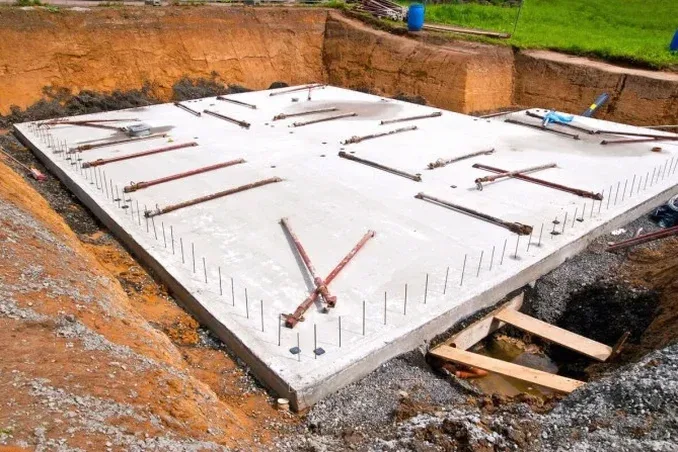
In Stockton, we see too many projects where standard footings get specified without accounting for the San Joaquin Valley's deep alluvial deposits. The soil profile here can shift from stiff clay to loose sand within a few feet. That variability makes a raft/mat foundation design the safest approach for distributing structural loads. Our team ties every calculation to site-specific data from an SPT drilling program or a CPT test campaign. We don't guess at bearing values. We measure them. This is especially critical near the Calaveras River corridor and in the Eight Mile Road area, where seasonal groundwater fluctuations soften the near-surface strata. Getting the mat thickness and reinforcement right from the start prevents differential settlement that would crack slabs and shear partition walls.

A rigid mat foundation in Stockton must bridge the unpredictable pockets of peat and loose sand that make isolated footings a gamble.
Our service areas

How we work

Contrast the conditions in Brookside with those in the industrial district south of Charter Way. Brookside sits on tighter, slightly overconsolidated clays that can support a thinner mat. South Stockton deals with looser, saturated sands and more organic content. The raft/mat foundation design must adapt. We adjust the rigidity based on the modulus of subgrade reaction derived from a plate load test. For larger footprints, we often recommend a grain size analysis to verify the drainage potential beneath the mat. If fines exceed 50%, we design for a higher water table. It's a straightforward adaptation, but skipping it leads to long-term pumping costs. Our approach for Stockton projects always includes a settlement analysis using consolidation data from undisturbed samples, not just presumptive bearing values from a textbook.
Raft/Mat Foundation Design in Stockton: Engineering on Compressible Valley Soils
Technical reference — Stockton

Local geotechnical context

ASCE 7 and the California Building Code (CBC) mandate explicit consideration of liquefaction for Stockton. Much of the city sits on Holocene alluvium mapped as liquefaction hazard zones. A raft/mat foundation design doesn't eliminate that risk. It manages it. When the granular soil liquefies, the mat must act as a rigid body to prevent punching shear failures at column bases. We model the loss of subgrade support in zones where the factor of safety drops below 1.0. For sites near Mormon Slough, we've seen groundwater within 4 feet of the surface in wet years. That hydrostatic pressure introduces uplift loads the mat must resist through its dead weight or tension anchors. Ignoring these local conditions results in a foundation that works on paper but fails in the next moderate seismic event.

Need a geotechnical assessment?

Reply within 24h.

Email: info@geotechnicalengineering1.com

Regulatory framework

ASCE 7-22, IBC 2024 (California Building Code), ASTM D1586, ASTM D2487, ACI 318-19

Technical parameters

ParameterTypical value
Bearing capacity (kcf)1.5 - 3.0
Typical depth of investigation30 - 50 ft
Min. mat thickness12 - 36 in
Reinforcement gradeASTM A615 Gr. 60
Concrete strength4,000 psi
Subgrade modulus (pci)50 - 200
Max. total settlement1 in

Frequently asked questions

Why choose a raft/mat foundation over isolated footings in Stockton?

The primary reason is the variable soil profile. In Stockton, you encounter layers of loose sand, soft clay, and organic silt within the same building footprint. A raft/mat foundation bridges these weak zones and distributes the load, reducing differential settlement to acceptable limits. It also provides a barrier against soil gas and groundwater ingress when designed as a full tanked system.

What is the cost range for raft/mat foundation design in Stockton?

For a complete design package including field investigation review, laboratory testing coordination, and the engineering report, the cost typically ranges from US$1,140 to US$4,440. The final figure depends on the building footprint, number of soil borings, and complexity of the structural loading.

How does Stockton's high groundwater affect a mat foundation?

A high water table introduces hydrostatic uplift pressure on the underside of the mat. Our design must check the structure's dead load against this buoyancy force. If the dead load is insufficient, we design the mat as a water-retaining structure with sufficient rebar to resist bending moments, or we specify a drainage blanket and sump system to relieve the pressure.

Location and service area

We serve projects in Stockton and surrounding areas.

View larger map