GEOTECHNICALENGINEERING1
STOCKTON
HomeSlopes & WallsRetaining wall design

Retaining Wall Design in Stockton: Soil Pressure and Seismic Demand

Geotechnical engineering with regional judgment.

LEARN MORE

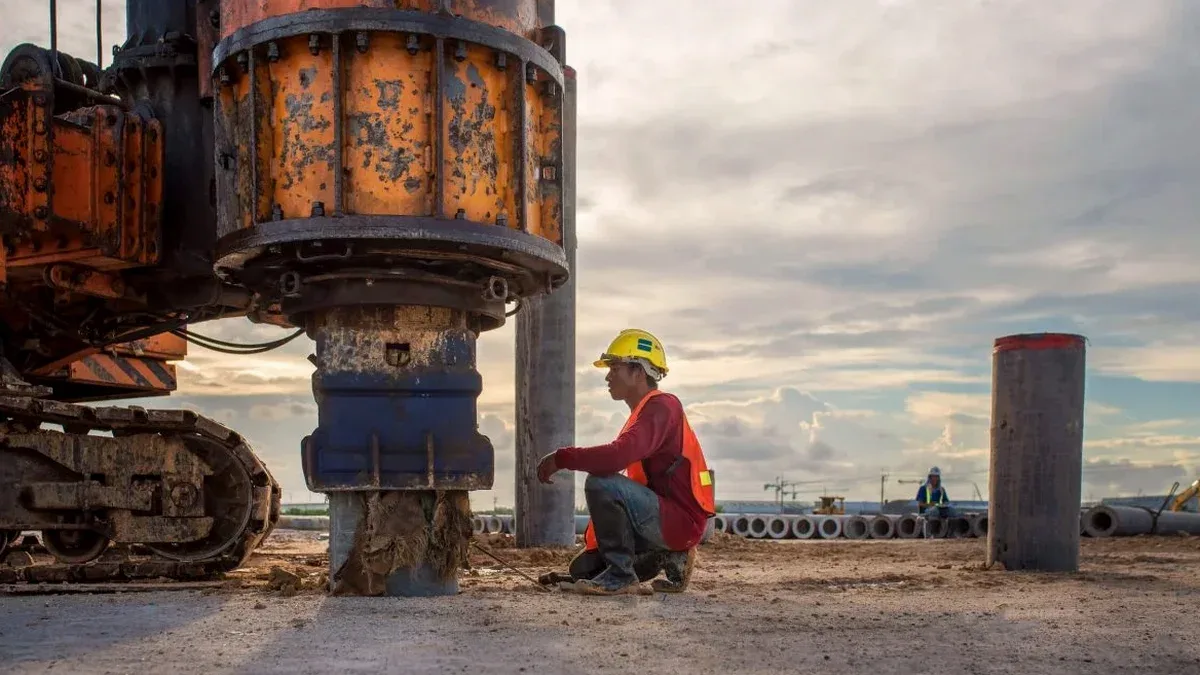
The San Joaquin Delta doesn't forgive poor planning. Stockton sits at just 13 feet above sea level, with a high water table and compressible peat and clay layers that make retaining wall design a challenge. Add a hot summer Mediterranean climate and that saturated soil expands and contracts with the seasons. A wall that looks fine in October can tilt by March. We approach every Stockton project with this in mind. Lateral earth pressure here rarely behaves like the textbook because the groundwater is always part of the equation. Before drafting a single section, we run the CPT test to map the soft zones and measure pore pressure dissipation — that data drives the wall geometry and reinforcement schedule.

In Stockton, the water behind the wall usually exerts more pressure than the soil itself — drainage design IS the structural design.
Our service areas

How we work

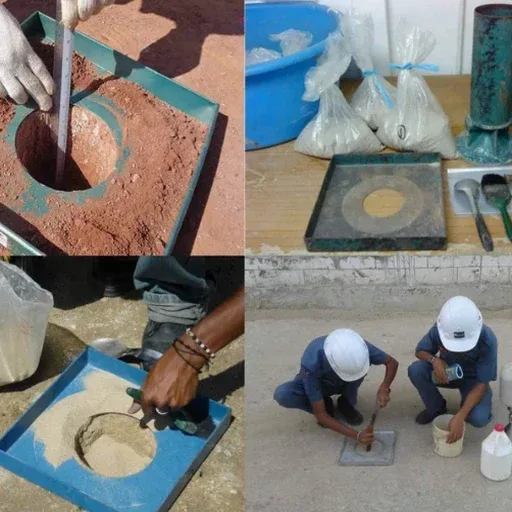
More than 200,000 miles of levees and channels crisscross the Delta region, and many Stockton neighborhoods sit on historic marshland converted for urban use. This means the near-surface soils often classify as CL or CH under the Unified Soil Classification System, with plasticity indices exceeding 20. Our design process starts with site-specific geotechnical parameters: effective friction angle from consolidated-undrained triaxial, unit weight measured with sand cone density tests on compacted backfill, and seasonal groundwater elevation data. We then model active, at-rest, and passive earth pressure conditions per ASCE 7-22. For taller walls exceeding 6 feet, we integrate seismic earth pressure coefficients using the Mononobe-Okabe method, calibrated to Stockton's site class D and E profiles. Drainage design matters here as much as reinforcement. Without a properly graded filter and weep system, hydrostatic buildup behind the wall can double the lateral load. Our team specifies clean crushed rock, geotextile separators, and perforated toe drains sized for the 100-year storm event, referencing Caltrans Standard Specifications Section 68. The goal is a wall that stays plumb through wet winters and dry summers.
Retaining Wall Design in Stockton: Soil Pressure and Seismic Demand
Technical reference — Stockton

Local geotechnical context

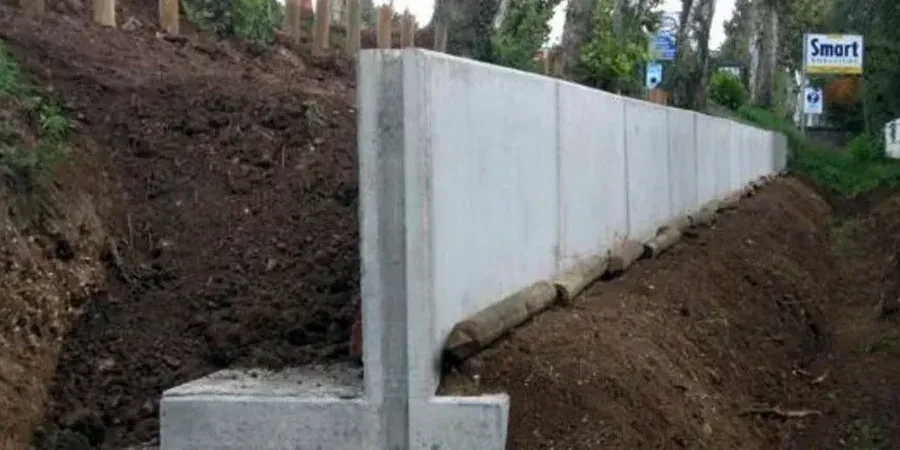
Stockton's building boom after the 1930s port expansion pushed residential tracts into former peat bogs and flood basins. We still see the consequences today. A homeowner on the north side calls about a garden wall that rotated outward after the first heavy rain of the season. The original builder treated the site like firm ground and skipped the geotechnical report. Our forensic review usually finds three things: no foundation drain, backfill compacted wet, and a footing bearing on organic silt that consolidated unevenly. The fix is never simple. It means removing the backfill, installing a properly designed stone column reinforced base if the bearing is too soft, and rebuilding with a cantilever section that resists the sliding we can measure with an inclinometer. A new wall in Stockton costs far less than repairing a failed one — and the Delta soil will test every shortcut you try to take. We design for the worst-case saturated condition because that condition arrives every winter.

Need a geotechnical assessment?

Reply within 24h.

Email: info@geotechnicalengineering1.com

Regulatory framework

ASCE 7-22 (Minimum Design Loads and Associated Criteria for Buildings and Other Structures), IBC 2021 Section 1806 (Retaining Walls), ASTM D2487 (Standard Practice for Classification of Soils for Engineering Purposes), NCMA Design Manual for Segmental Retaining Walls (3rd Edition)

Technical parameters

ParameterTypical value
Design life (IBC Table 1604.5)50 years minimum
Seismic coefficient (kh)0.15–0.25 per ASCE 7 site class
Backfill friction angle30°–34° (compacted sand/gravel)
Groundwater factor (ru)0.15–0.30 in Delta proximity
Sliding safety factor (static)≥ 1.5 per IBC 1806.1
Overturning safety factor (seismic)≥ 1.1 per ASCE 7 load combo
Typical wall height range4–18 ft for gravity and cantilever

Frequently asked questions

What does retaining wall design cost in Stockton?

Our engineering design fee for a typical Stockton retaining wall ranges from US$920 to US$4,660. This covers the geotechnical investigation, lateral earth pressure calculations, structural design of the wall section, and the signed and stamped construction plans. The final cost depends on wall height, proximity to water, and whether a CPT or boring program is needed to characterize the foundation soils.

How high can a retaining wall be without a permit in Stockton?

The City of Stockton generally requires a building permit for retaining walls over 4 feet in height measured from the bottom of the footing to the top of the wall. Walls supporting a surcharge (like a driveway or building) require engineering regardless of height. Always check with Stockton Building & Safety Division for the current code adoption, as the 2022 California Building Code (IBC-based) applies.

What backfill material do you specify for Delta soils?

We specify free-draining granular backfill meeting Caltrans Class 2 Permeable Material gradation, placed in 8-inch lifts and compacted to 95% of modified Proctor maximum dry density. Behind the wall, we include a 12-inch minimum thickness drainage zone of clean crushed rock wrapped in a nonwoven geotextile, with a 4-inch perforated PVC toe drain connected to a positive outlet. This system prevents the hydrostatic pressure buildup that causes most Stockton wall failures.

Location and service area

We serve projects in Stockton and surrounding areas.

View larger map