GEOTECHNICALENGINEERING1
STOCKTON
HomeLaboratoryLaboratory CBR test

Laboratory CBR Testing for Pavement Design in Stockton, CA

Geotechnical engineering with regional judgment.

LEARN MORE

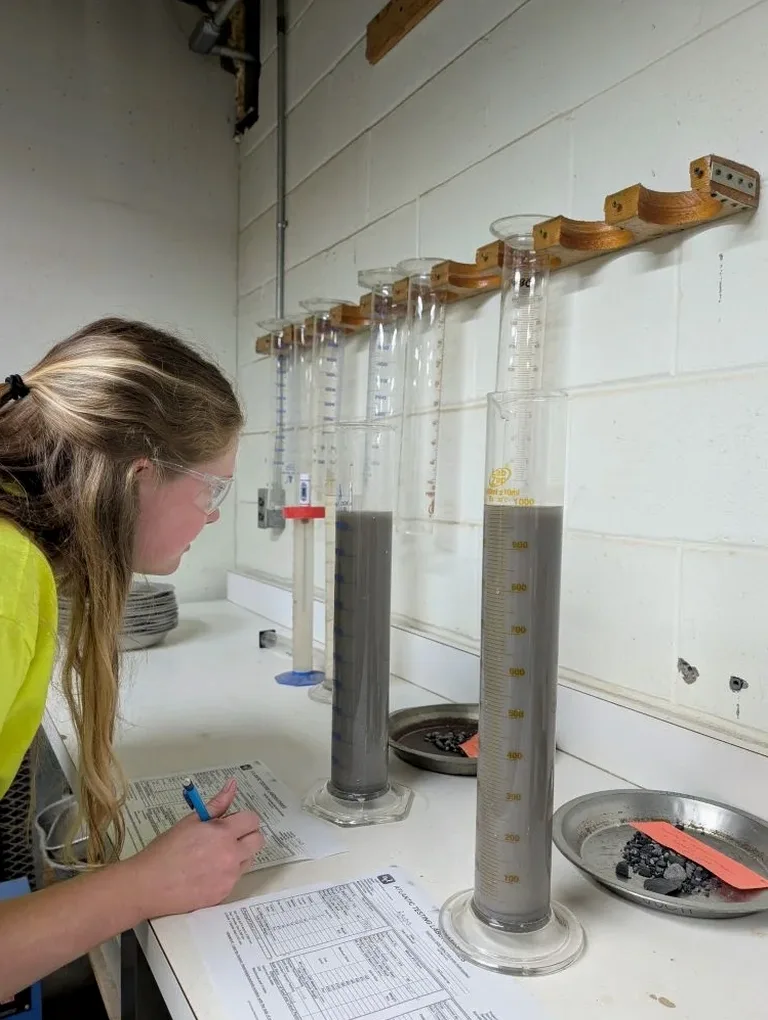
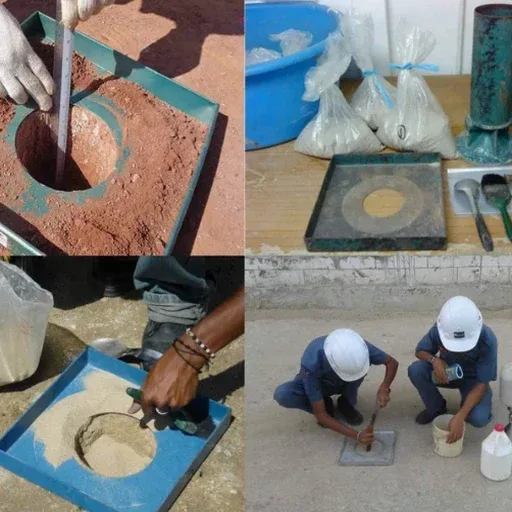
Stockton sits on deep alluvial deposits where the San Joaquin River has spent millennia laying down layers of silty clay and loose sand. The water table here often sits barely 8 to 12 feet below ground surface, which creates some of the trickiest subgrade conditions in the Central Valley. That combination of high moisture and fine-grained soils makes the laboratory CBR test an essential step in any pavement design, because a material that looks solid when dry can lose most of its bearing capacity after a winter storm. Our team runs every soaked CBR specimen inside a controlled-temperature chamber following ASTM D1883, and we correlate those results with in-situ density measurements taken during subgrade compaction so the structural section stays consistent from the lab bench to the finished grade.

A soaked CBR value below 3 percent on a Stockton silt means you are essentially building on a sponge — and no pavement section survives that without stabilization or over-excavation.
Our service areas

How we work

With a population pushing 320,000 and freight traffic from the Port of Stockton pounding local arterials daily, pavement failures here tend to show up fast when the subgrade is under-designed. A laboratory CBR test measures the penetration resistance of a compacted soil sample under simulated saturation, giving you a number that feeds straight into the Caltrans Highway Design Manual thickness curves. We prepare remolded specimens at target moisture-density relationships and test them under a 0.1-inch-per-minute penetration rate, recording load values at 0.1-inch and 0.2-inch deflections. For projects near the Delta where organic silts appear in the upper profile, we often pair the CBR data with a grain-size analysis to confirm fines content and flag any material that might need stabilization before paving begins.
Laboratory CBR Testing for Pavement Design in Stockton, CA
Technical reference — Stockton

Local geotechnical context

A warehouse project off Arch Road ran into trouble when the geotech called for a CBR of 15 on native material that lab results later showed averaged 5. The contractor had already proof-rolled the pad and placed base rock before the numbers came back, and the owner ended up paying for a cement-stabilized layer they had not budgeted for. That scenario replays itself across Stockton whenever the laboratory CBR test gets treated as a formality instead of a driver of the pavement design. High plasticity clays that swell during the four-day soak can drop to CBR values below 3, and if that number is not known before the structural section is finalized, the asphalt will crack and rut within two seasons. The cost of the test is trivial compared to a full-depth reclamation on a failed parking lot.

Need a geotechnical assessment?

Reply within 24h.

Email: info@geotechnicalengineering1.com

Regulatory framework

ASTM D1883 – Standard Test Method for California Bearing Ratio (CBR) of Laboratory-Compacted Soils, ASTM D698 / D1557 – Moisture-Density Relations (Standard and Modified Proctor), Caltrans Highway Design Manual, Chapter 600 – Pavement Design, ASTM D2487 – Unified Soil Classification System

Technical parameters

ParameterTypical value
Test standardASTM D1883
Specimen compactionStandard or Modified Proctor (ASTM D698 / D1557)
Soaking period96 hours submerged
Penetration rate0.05 in/min (0.1 in/min optional per agency)
Surcharge weight10 lb annular (simulates pavement)
Typical Stockton subgrade rangeCBR 2-8 (untreated silty clay)
Reported resultCBR at 0.1 in and 0.2 in penetration

Frequently asked questions

How much does a laboratory CBR test cost for a Stockton project?

A single-point laboratory CBR test typically runs between US$120 and US$230, depending on whether it is Standard or Modified Proctor compaction and whether you need the full Proctor curve alongside it. Most pavement investigations require at least three points to bracket the moisture-density relationship, so a complete subgrade characterization package usually falls in proportion to that range.

Do I need a CBR test if I am only paving a small parking lot?

Yes, and in Stockton it is especially important. A small parking lot on silty clay that sees delivery trucks will fail just as fast as a roadway if the subgrade CBR is overestimated. The laboratory CBR test gives you the soaked bearing value that determines whether your asphalt or concrete thickness is adequate — skipping it risks alligator cracking within the first rainy season.

What CBR value is considered acceptable for a roadway subgrade?

Caltrans typically looks for a soaked CBR of at least 5 to 10 percent for highway subgrades, while local streets and parking lots can sometimes work with values as low as 3 if the pavement section is thickened accordingly. The exact target depends on traffic loading, but anything below 3 in Stockton silts almost always requires stabilization with cement or lime before base placement.

Location and service area

We serve projects in Stockton and surrounding areas.

View larger map