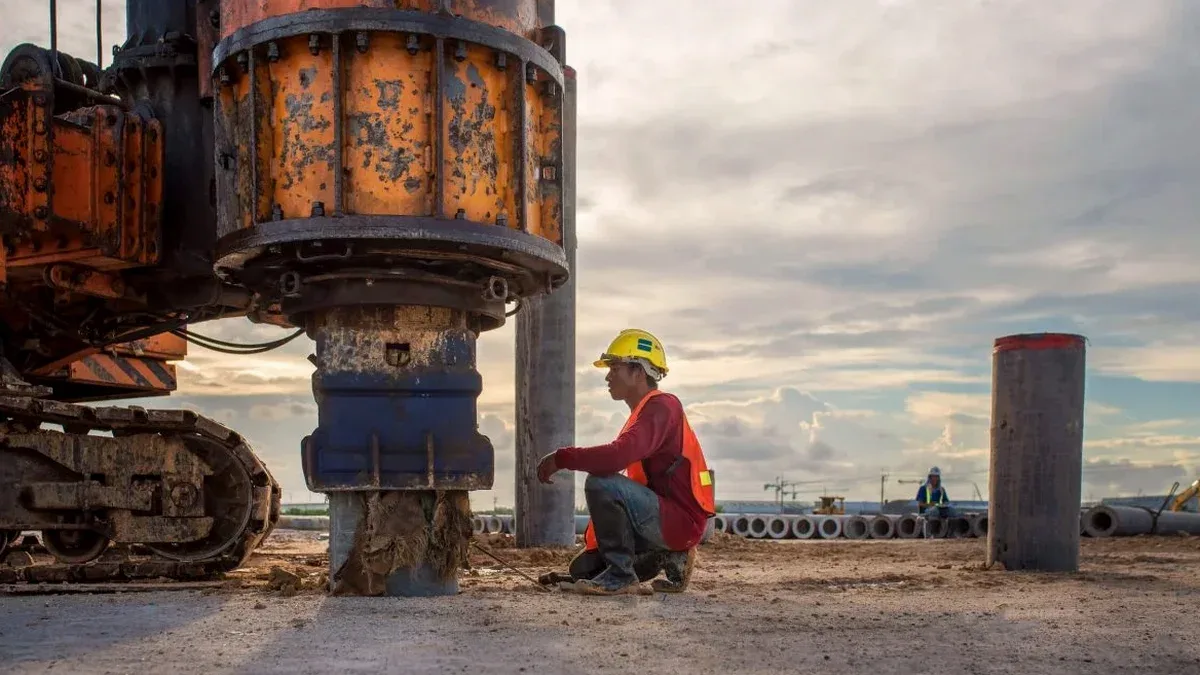
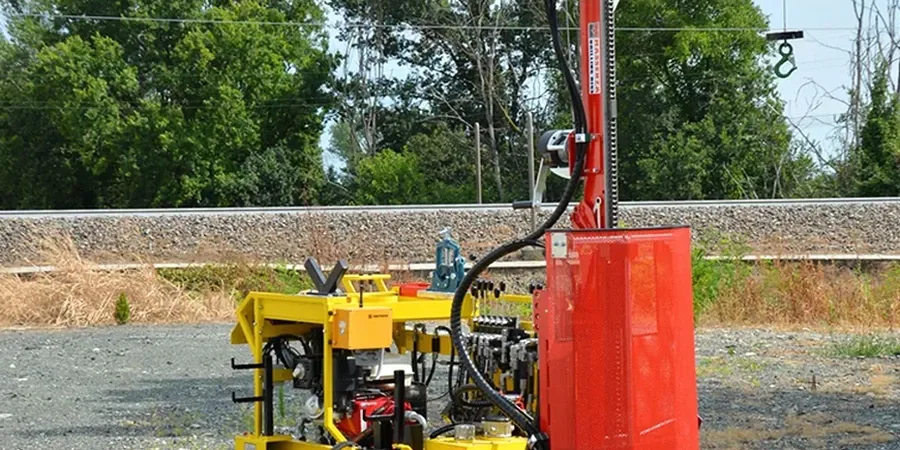
The CME-75 drill rig sets up with a 140-pound safety hammer tripping at 30 inches of free fall. In Stockton the split-spoon sampler is driven through silty sands and soft organic clays that define the eastern edge of the Delta. The crew logs blow counts every 6 inches, recording N-values that feed directly into bearing-capacity spreadsheets and liquefaction-triggering curves. We follow ASTM D1586 without shortcuts: the rope is wrapped two-and-a-quarter turns around the cathead, the sampler seats firmly on undisturbed material below the casing, and each spoon is opened immediately so the field geologist can classify the recovery before oxidation alters the fines. A single boring can span from the levee crest down to the Pleistocene alluvium at 60 feet, yielding a continuous profile that the structural engineer needs for shallow footings or deep driven piles in the Stockton area.
An SPT N-value of 4 in saturated Delta sand at 15 feet is not a number to average — it is a flag for cyclic mobility that drives the foundation decision.