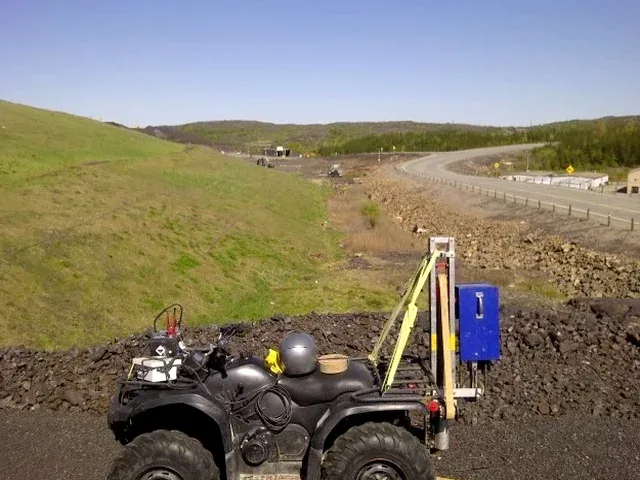
Out here in the northern San Joaquin Valley, the subsurface doesn't broadcast its intentions. Layers of alluvium, lenses of organics, and the deep Stockton Arch bedrock make every site a puzzle. We've seen projects stall because the standard borehole grid missed a buried channel or a sharp lateral contrast in stiffness. Seismic refraction alone often loses resolution past the water table or when velocity inversions appear. That's why the crew relies on full seismic tomography. We integrate first-arrival traveltime picks with multi-offset reflection processing. The result is a continuous velocity cross-section, not just a low-res 2-layer model. For a warehouse pad near the Port of Stockton, we combined the tomographic profile with MASW to confirm Vs30 values before grading, and the comparison with existing SPT drilling logs tightened the interpretation of the alluvial fill thickness.
A tomogram is not a single velocity. It's 1,200+ ray paths inverted until the model matches the real first arrivals within 2 milliseconds.