GEOTECHNICALENGINEERING1
STOCKTON
HomeLaboratoryGrain size analysis (sieve + hydrometer)

Precision Grain Size Analysis for Stockton’s Alluvial Soils and Delta Sediments

Geotechnical engineering with regional judgment.

LEARN MORE

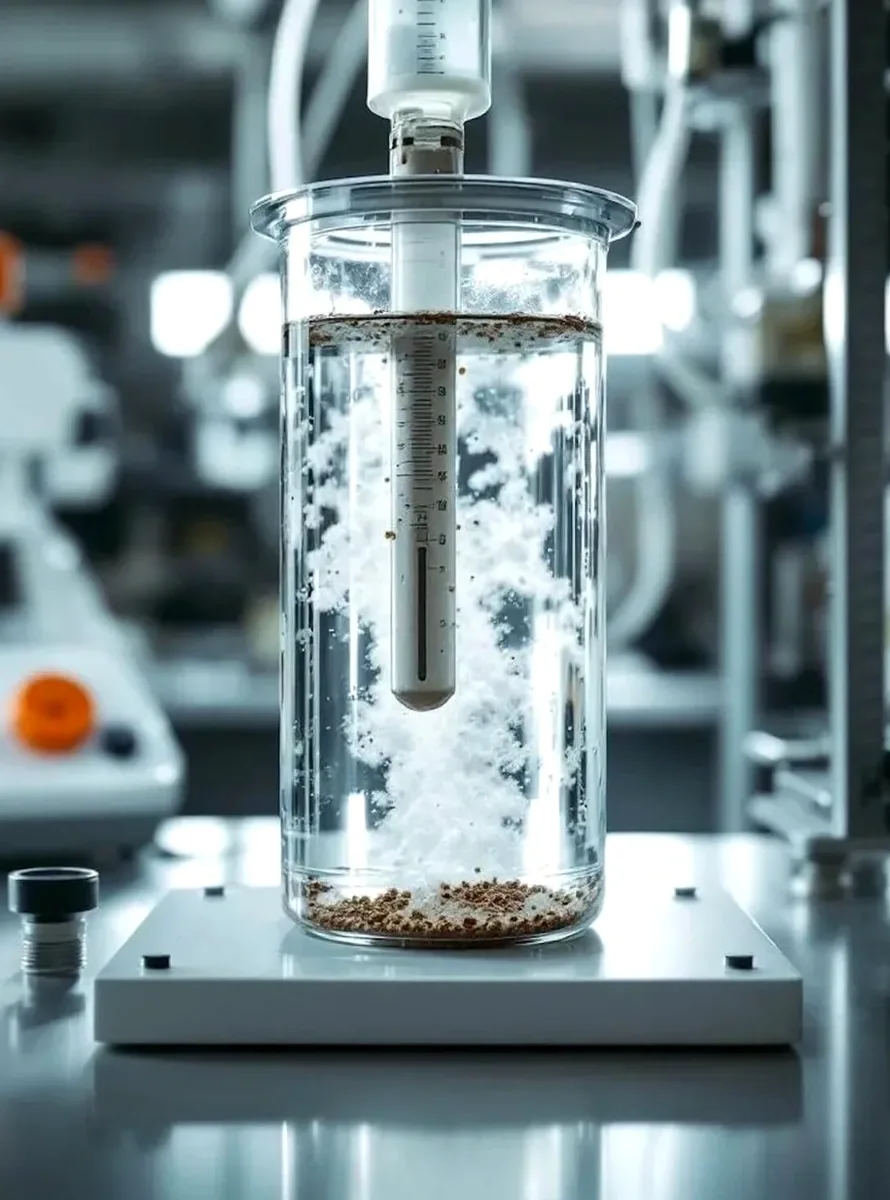
Stockton’s position at the head of the Sacramento-San Joaquin Delta means the subsurface is rarely predictable. The city’s soils range from tight, overconsolidated clays near the port to loose silty loams deposited by historic flooding across the 37.95°N corridor. When a grain size analysis skips the full sieve-plus-hydrometer workflow, contractors risk misclassifying a low-plasticity silt as a clean sand—an error that cascades into drainage failures and differential settlement. Our laboratory runs the complete ASTM D2487 suite, combining mechanical shaking through a stack of sieves down to No. 200 with a hydrometer sedimentation test calibrated for the 0.075 mm to 0.001 mm range. The result captures everything from coarse sand to the colloidal fraction that often defines the behavior of Stockton basin soils. For deeper Delta deposits where organics appear, we pair particle sizing with an Atterberg limits evaluation to confirm whether the fine fraction behaves as silt or clay under the Unified Soil Classification System.

Missing the clay fraction in a Stockton Delta silt can inflate bearing capacity estimates by 40 percent—full hydrometer analysis prevents that blind spot.
Our service areas

How we work

A recent warehouse expansion off Charter Way illustrated why mechanical sieving alone isn’t enough in this part of the Central Valley. The upper two meters presented as a well-graded sand with gravel, but below that sat a uniform fine sand with silt streaks that barely passed the No. 200 sieve. Running the hydrometer on the minus-200 fraction revealed a 22 percent clay content that the sieve-only report had completely missed. Had the design team relied on that incomplete curve, the shallow footing bearing capacity would have been overestimated by nearly 40 percent. The corrected analysis, which plotted the full 0.001 mm to 4.75 mm distribution on a semi-log graph, allowed the geotechnical engineer to specify a deeper excavation and a compacted granular fill that accommodated the silt’s low permeability. The Stockton climate adds another variable: winter tule fog raises groundwater within a meter of the surface in many blocks south of the Calaveras River, and soils with a high percentage of fines can lose structure rapidly when saturated. Our reports include the coefficient of uniformity (Cu) and coefficient of curvature (Cc) for every sample, giving structural engineers the gradation parameters they need to assess frost action potential and internal stability of filter layers in retaining structures.
Precision Grain Size Analysis for Stockton’s Alluvial Soils and Delta Sediments
Technical reference — Stockton

Local geotechnical context

The IBC 2021 edition, adopted by Stockton’s Building & Life Safety Division, ties foundation design parameters directly to the soil classification that comes out of ASTM D2487. If a grain size analysis stops at the No. 200 sieve and calls the material “silty sand” without quantifying the minus-75 µm fraction, the geotechnical report may assign a friction angle of 34 degrees to a soil that actually behaves more like a 28-degree elastic silt. In the Delta margin zones—particularly the reclamation districts west of Interstate 5—this misclassification becomes dangerous because the fine fraction often contains montmorillonite clays that swell and shrink with the seasonal moisture swings Stockton experiences between dry summers and wet El Niño winters. A complete hydrometer curve that extends to 0.001 mm reveals whether the plasticity index is likely to exceed 15, which triggers entirely different lateral earth pressure assumptions for basement walls and pile shafts. The laboratory’s accreditation under ISO 17025 ensures that every hydrometer reading is temperature-corrected and that the sedimentation cylinder is maintained in a vibration-free water bath, eliminating the 3 to 5 percent bias that room-temperature fluctuations can introduce in an unconditioned space.

Need a geotechnical assessment?

Reply within 24h.

Email: info@geotechnicalengineering1.com

Explanatory video

Regulatory framework

ASTM D2487 – Standard Practice for Classification of Soils for Engineering Purposes (Unified Soil Classification System), ASTM D7928 – Standard Test Method for Particle-Size Distribution (Gradation) of Fine-Grained Soils Using the Sedimentation (Hydrometer) Analysis, ASTM D6913 – Standard Test Methods for Particle-Size Distribution (Gradation) of Soils Using Sieve Analysis, IBC 2021 (California Building Code Title 24, Part 2) – Section 1803 Geotechnical Investigations, ASCE 7-22 – Minimum Design Loads and Associated Criteria for Buildings and Other Structures

Technical parameters

ParameterTypical value
Test methodASTM D422 / D6913 (sieve) + D7928 (hydrometer)
Sieve range75 mm (3 in.) down to 75 µm (No. 200)
Hydrometer range75 µm to approximately 1 µm
Sample mass required250 g for fine-grained; 500 g+ for sandy soils
Dispersing agentSodium hexametaphosphate solution per ASTM E11
Coefficients reportedCu, Cc, D10, D30, D60, % gravel-sand-silt-clay
Classification standardASTM D2487 (Unified Soil Classification System)

Frequently asked questions

Why does a grain size analysis need both sieving and a hydrometer for Stockton soils?

Many Stockton soils contain 15 to 40 percent fines passing the No. 200 sieve. Sieving alone cannot separate silt from clay or measure particle sizes below 75 microns. The hydrometer analysis quantifies the silt and clay fractions down to roughly 1 micron, which is what determines whether the soil classifies as a silty sand (SM) or a clayey sand (SC) under ASTM D2487. That distinction changes the allowable bearing pressure and the drainage characteristics the structural engineer relies on.

What does a grain size analysis cost for a project in the Stockton area?

For a standard sieve-plus-hydrometer package on a single sample, the cost ranges from US$100 to US$170 depending on whether the sample requires pre-treatment for organics or soluble salts. Projects needing multiple specimens from different depths can be quoted on a per-sample basis with volume discounts applied for larger geotechnical investigation programs.

How long does it take to get results from a hydrometer test?

A full hydrometer sedimentation test requires a minimum of 24 hours for the fine fraction to settle through the graduated cylinder, plus an additional 24 to 48 hours for oven-drying the retained sieve fractions and computing the combined curve. Rush turnaround can be arranged for projects on tight construction schedules, though the sedimentation time itself cannot be shortened without violating ASTM D7928 procedure.

Location and service area

We serve projects in Stockton and surrounding areas.

View larger map